- Reports
- Business Case for Emotional Intelligence
- Do Emotional Intelligence Programs Work?
- Emotional Competence Framework
- Emotional Intelligence: What it is and Why it Matters
- Executives' Emotional Intelligence (mis) Perceptions
- Guidelines for Best Practice
- Guidelines for Securing Organizational Support For EI
- Johnson & Johnson Leadership Study
- Ontario Principals’ Council Leadership Study
- Technical Report on Developing Emotional Intelligence
- Measures
- Emotional Capital Report (ECR)
- Emotional Intelligence Quotient (EQ-i)
- Emotional & Social Competence Inventory 360 (ESCI)
- Emotional & Social Competence Inventory-University (ESCI-U)
- Geneva Emotional Competence Test
- Genos Emotional Intelligence Inventory (Genos EI)
- Team Emotional Intelligence (TEI)
- Mayer Salovey Caruso Emotional Intelligence Test (MSCEIT)
- Profile of Emotional Competence (PEC)
- Schutte Self-Report Inventory (SSRI)
- Six Seconds Emotional Intelligence Assessment (SEI)
- Trait Emotional Intelligence Questionnaire (TEIQue)
- Wong's Emotional Intelligence Scale
- Work Group Emotional Intelligence Profile (WEIP)
- References
- Model Programs
- Achievement Motivation Training
- Care Giver Support Program
- Competency-Based Selection
- Emotional Competence Training - Financial Advisors
- Executive Coaching
- Human Relations Training
- Interaction Management
- Interpersonal Conflict Management - Law Enforcement
- Interpersonal Effectiveness Training - Medical Students
- JOBS Program
- LeaderLAB
- Self-Management Training to Increase Job Attendance
- Stress Management Training
- Weatherhead MBA Program
- Williams' Lifeskills Program
- Article Reprints
- Members
- Events
- Bookstore
Emotional Intelligence Consortium Bookstore
To order any of these books please click on the book cover or title.

Riess, H.& Neporent, L. (2018). The Empathy Effect.
Empathy is undergoing a new evolution. In a global and interconnected culture, we can no longer afford to identify only with people who seem to be a part of our “tribe.” As Dr. Helen Riess has learned, our capacity for empathy is not just an innate trait—it is also a skill that we can learn and expand. With The Empathy Effect, Dr. Riess presents a definitive resource on empathy: the science behind how it works, new research on how empathy develops from birth to adulthood, and tools for building your capacity to create authentic emotional connection with others in any situation.

When it comes to mentoring, peer coaching is an undervalued workhorse. It's effective, inexpensive, widely applicable, and relatively easy to implement. Many coaches consider it to be the next wave in professional development. Peer Coaching at Work draws on research and practice to deliver a hands-on guide to this powerful relational learning technique.
The authors—all leaders in the field—present a rigorously tested three-part model for facilitating peer coaching relationships in one-on-one settings and in larger groups. With lively case studies, they define peer coaching as a focused relationship between equals who supportively learn from, actively listen to, and judiciously question each other, which leads to breakthroughs that may otherwise lie dormant in one's career. A fundamental guide for anyone with an interest in mentoring and transformational learning, this book is a must-have for the talent management bookshelf.
.jpg)
Ashkanasy, N. M., Zerbe, W. J., & Hartel, C. E. J. (Eds.). (2012). Experiencing and Managing Emotions in the Workplace. Emerald Group Publishing.
This volume contains a further selection of the best papers presented at the Seventh Emonet conference (Montreal, Canada, August 2010), following on from Volume 7 and augmented once again with invited chapters authored by leading scholars in the field. Experiencing and Managing Emotions in the Workplace comprises fourteen chapters arranged in four sections: The experience of emotion; The dynamics of emotion; Regulating emotion; and The emotionally intelligent organization. These encompass a variety of methodological approaches, including qualitative and quantitative research, sourced from research conducted in organizations in the USA, Europe, and Australasia. The volume's secondary theme is 'care and compassion', the theme of the Academy of Management meetings that followed the Emonet conference in Montreal.
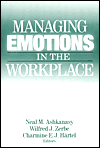 Ashkanasy, N. M., Zerbe, W. J., & Hartel, C. E. J. (Eds.). (2002). Managing Emotions in the Workplace. M. E. Sharpe.
This book advances the understanding of the causes and effects of emotions at work and extends existing theories to consider implications for the management of emotions. The international cast of contributors examine the practical issues raised when organizations are studied as places where emotions are aroused, suppressed, used, and avoided. The book also joins the debate on how organizations and individuals ought to manage emotions in the workplace. It is designed for use in any course in which the role of emotions in the workplace is a central concern. Scholars and consultants will also find the book to be an essential resource on this emerging field.

Bar-On, R., Maree, J. G., Elias, M. J. (2007). Educating People to be Emotionally Intelligent. Some of the best known researchers, professors and practitioners worldwide team up in this work to recognize and reflect the rapidly growing global interest in scientifically-based applications of emotional intelligence in education, to show readers the diverse applications of EI, and to guide them in applying what is known about this topic. The breadth of coverage, array of experts, international scope and clear, practical tone of this book will appeal to parents, educators, psychologists, counselors, trainers, and corporate coaches, mental health and human resource practitioners and healthcare providers.
 Bar-On, R. & Parker, J. D. A. (Eds.). (2000). The Handbook of Emotional Intelligence: Theory, Development, Assessment, and Application at Home, School and in the Workplace. San Francisco: Jossey-Bass/Wiley.
Sweeping in scope and building on eighty years of scientific work, the Handbook of Emotional Intelligence presents information on the most important conceptual models, reviews and evaluates the most valid and reliable methods for assessing emotional intelligence, and offers specific guidelines for applying this important concept in a variety of settings. Reuven Bar-On, the person who coined the term "EQ" and developed the first test of emotional intelligence (the EQ-i), assembled together with James D.A. Parker a brilliant group of researchers, academics and practitioners for this basic and eminently useful publication.

Emotional intelligence has emerged as an area of intense interest in both scientific and lay circles. Yet while much attention has been given to the measurement of "EQ," little has been written about the psychological underpinnings of emotional intelligence. This book fills an important gap in the literature, linking the ideas embodied in the emotional intelligence concept to ongoing research and theoretical work in the field of affect science. Chapters by foremost investigators illuminate the basic processes by which people perceive and appraise emotion, use emotion to facilitate thought, understand and communicate emotion concepts, and manage their own and others' emotions.
 Boyatzis, R. E. & McKee, A. (2005). Resonant Leadership: Renewing Yourself and Connecting with Others Through Mindfulness, Hope, and Compassion. Boston: Harvard Business School Press.
The best seller Primal Leadership introduced us to "resonant" leaders--individuals who manage their own and others' emotions in ways that drive success. Leaders everywhere recognized the validity of resonant leadership, but struggled with how to achieve and sustain resonance amid the relentless demands of work and life. Now, Richard Boyatzis and Annie McKee provide an indispensable guide to overcoming the vicious cycle of stress, sacrifice, and dissonance that afflicts many leaders. Drawing from extensive multidisciplinary research and real-life stories, Resonant Leadership offers a field-tested framework for creating the resonance that fuels great leadership. Rather than constantly sacrificing themselves to workplace demands, leaders can manage the cycle using specific techniques to combat stress, avoid burnout, and renew themselves physically, mentally, and emotionally. The book reveals that the path to resonance is through mindfulness, hope, and compassion and shows how intentionally employing these qualities creates effective and enduring leadership. Great leaders are resonant leaders. Resonant Leadership offers the inspiration--and tools--to spark and sustain resonance in ourselves and in those we lead.
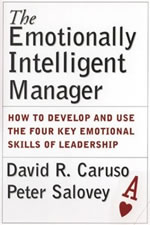 Caruso, D. R. & Salovey, P. (2004). The Emotionally Intelligent Manager: How to Develop and Use the Four Key Emotional Skills of Leadership. Jossey-Bass.
 We have long been taught that emotions should be felt and expressed in carefully controlled ways, and then only in certain environments and at certain times. This is especially true when at work, particularly when managing others. It is considered terribly unprofessional to express emotion while on the job, and many of us believe that our biggest mistakes and regrets are due to our reactions at those times when our emotions get the better of us. David R. Caruso and Peter Salovey believe that this view of emotion is not correct. The emotion centers of the brain, they argue, are not relegated to a secondary place in our thinking and reasoning, but instead are an integral part of what it means to think, reason, and to be intelligent. In The Emotionally Intelligent Manager, they show that emotion is not just important, but absolutely necessary for us to make good decisions, take action to solve problems, cope with change, and succeed. The authors detail a practical four-part hierarchy of emotional skills: identifying emotions, using emotions to facilitate thinking, understanding emotions, and managing emotions—and show how we can measure, learn, and develop each skill and employ them in an integrated way to solve our most difficult work-related problems.
 Cherniss, C. & Adler, M. (2000). Promoting Emotional Intelligence in Organizations: Making Training in Emotional Intelligence Effective. Alexandria, VA: American Society for Training and Development.
The work of the Consortium now can be found in a new book. Using case-based examples of model programs in emotional intelligence training, the book provides a hands-on and easily accessible methodology for designing training programs in a wide variety of business and organizational settings. The guidelines presented in the book can help human resource development professionals, managers, and consultants to develop their own effective methods for helping people to become more emotionally intelligent and, therefore, more effective.

How does emotional intelligence as a competency go beyond the individual to become something a group or entire organization can build and utilize collectively? Written primarily by members of the Consortium for Research on Emotional Intelligence in Organizations (CREIO), founded by recognized EI experts Daniel Goleman and Cary Cherniss, this ground breaking compendium examines the conceptual and strategic issues involved in defining, measuring and promoting EI in organizations. The book's contributing authors share 15 models that have been field-tested and empirically validated in existing organizations. They also detail 22 guidelines for promoting EI and outline a variety of measurement strategies for assessing emotional and social competence in organizations.

The emphasis of the book is applied, in that it provides and contrasts concrete examples of what we do in our interventions in a wide variety of situations. The chapters present descriptions of programs, including specific activities and exercises that influence emotional knowledge and social effectiveness more generally. While practical in its focus, this book also discusses the theoretical bases for these approaches. These are new programs with outcomes that are now beginning to be studied. The book presents the most important and recent research findings that examine the efficacy of these programs.

In this second edition, leaders in the field present the most up-to-date research on the assessment and use of the emotional intelligence construct. Importantly, this edition expands on the previous by providing greater coverage of emotional intelligence interventions. As with the first edition, this second edition is both scientifically rigorous, yet highly readable and accessible to a non-specialist audience. It will therefore be of value to researchers and practitioners in many disciplines beyond social psychology, including areas of basic research, cognition and emotion, organizational selection, organizational training, education, clinical psychology, and development psychology.

David, S. (2016). Emotional Agility: Get Unstuck, Embrace Change, and Trive in Work and Life. New York, NY: Avery
The path to personal and professional fulfillment is rarely straight. Ask anyone who has achieved his or her biggest goals or whose relationships thrive and you’ll hear stories of many unexpected detours along the way. What separates those who master these challenges and those who get derailed? The answer is agility—emotional agility.
Emotional agility is a revolutionary, science-based approach that allows us to navigate life’s twists and turns with self-acceptance, clear-sightedness, and an open mind. Renowned psychologist Susan David developed this concept after studying emotions, happiness, and achievement for more than twenty years. She found that no matter how intelligent or creative people are, or what type of personality they have, it is how they navigate their inner world—their thoughts, feelings, and self-talk—that ultimately determines how successful they will become.

Druskat, V. U., Sala, F., & Mount, G. J. (Eds.). (2005). Linking Emotional Intelligence and Performance at Work. San Francisco: Jossey-Bass.
In this edited volume, leading edge researchers discuss the link between EI and workplace performance. Contributors from many areas such as social science, management (including organizational practitioners), and psychologists have come together to develop a better understanding of how EI can influence work performance, and whether research supports it. A unique feature of this book is that it integrates the work of social scientists and organizational practitioners. Their mutual interests in EI provide a unique opportunity for basic and applied research and practices to learn from one another in order to continually refine and advance knowledge on EI. The primary audience for this book is researchers, teachers, and students of psychology, management, and organizational behavior. Due to its clear practical applications to the workplace, it will also be of interest to organizational consultants and human resource practitioners.

The Emotional and Social Intelligence Leadership Competency Model is a unique framework developed by Daniel Goleman and Richard Boyatzis, identifying the 12 specific, evidence-based competencies that are the building blocks of emotional and social intelligence in leadership. This collection includes all 12 of the primers in this series, one for each ESI competency, written by a uniquely qualified group of thought leaders, researchers, experts, and coaches on each of the topics covered, including Daniel Goleman, Richard Boyatzis, Vanessa Druskat, Richard J. Davidson and many others.
Each primer offers a definition of the competency at hand, research around the topic, stories to illustrate what it looks like in real leaders, and ways for the reader to develop it in their own personal and professional life. The primers are concise, digestible, and pocket-sized, perfect for leaders or managers, educators, coaches or consultants, and anyone interesting in developing these suite of competencies.
 Goleman, D., Boyatzis, R., Kohlrieser, G., Davidson, R., Druskat, V. (2016) Crucial Competence: Building Emotional and Social Leadership
Crucial Competence is a video series featuring exclusively curated conversations led by prominent author and thought leader in emotional intelligence, Daniel Goleman. In the series, Daniel Goleman introduces the 12 competency model of emotional intelligence and then explores each competency through interviews with influential leaders in emotional intelligence research. Viewers will gain evidence-based insights into how and why emotional intelligence is essential in a variety of leadership roles, a deeper understanding of the 12 core competencies known to differentiate performance, and specific methods to integrate into your professional life in order to increase self and social awareness, adaptability, collaboration, and effectiveness as a leader.
 Goleman, D. (2013). Focus: The Hidden Driver of Excellence. New York: Harper Collins. In Focus, Psychologist and journalist Daniel Goleman, author of the #1 international bestseller Emotional Intelligence, offers a groundbreaking look at today’s scarcest resource and the secret to high performance and fulfillment: attention.
Combining cutting-edge research with practical findings, Focus delves into the science of attention in all its varieties, presenting a long overdue discussion of this little-noticed and under-rated mental asset. In an era of unstoppable distractions, Goleman persuasively argues that now more than ever we must learn to sharpen focus if we are to survive in a complex world.
Goleman boils down attention research into a threesome: inner, other, and outer focus. Drawing on rich case studies from fields as diverse as competitive sports, education, the arts, and business, he shows why high-achievers need all three kinds of focus, and explains how those who rely on Smart Practices—mindfulness meditation, focused preparation and recovery, positive emotions and connections, and mental “prosthetics” that help them improve habits, add new skills, and sustain greatness—excel while others do not.
 Goleman, D. (2011). Leadership: The Power of Emotional Intelligence. More Than Sound; 1st edition. Daniel Goleman's Leadership: The Power of Emotional Intelligence is the author's first comprehensive collection of his key findings on leadership. This often-cited, proven-effective material will help develop stellar management, performance and innovation. The collection makes available his most sought-after writings in one single volume, including: - Managing With Heart - What Makes a Leader? - Leadership That Gets Results - The Group IQ - Primal Leadership - The Social Brain - The Sweet Spot for Achievement - Developing Emotional Intelligence "I've pulled together more than two decade's worth of my writings that best illustrate EI's positive impact on personal and organizational excellence," Goleman says. "Consider the book your toolbox. Each chapter is a unique and useful device that helps leaders, coaches, human resources officers, managers, and educators to effectively guide and motivate others." 117 Pages with an introduction by the
.gif) Goleman, D. (2011). The Brain and Emotional Intelligence: New Insights. More Than Sound; 1st edition. Over the last decade and a half there has been a steady stream of new insights that further illuminate the dynamics of emotional intelligence. In this new book, Daniel Goleman explains what we now know about the brain basis of emotional intelligence, in clear and simple terms. This book will deepen your understanding of emotional intelligence and enhance your ability for its application. You will learn the most recent brain findings that explain: -The Big Question being asked, particularly in academic circles: "Is there such an entity as 'emotional intelligence' that differs from IQ?" -The brain's ethical radar -The neural dynamics of creativity -The brain circuitry for drive, persistence, and motivation -The brain states underlying optimal performance, and how to enhance them -The social brain: rapport, resonance, and interpersonal chemistry -Brain 2.0: our brain on the web -The varieties of empathy and key gender differences -The dark side: sociopathy at work -Neural lessons for coaching and enhancing emotional intelligence abilities.
Goleman, D. (2011). The Brain and Emotional Intelligence: New Insights. More Than Sound; 1st edition. Over the last decade and a half there has been a steady stream of new insights that further illuminate the dynamics of emotional intelligence. In this new book, Daniel Goleman explains what we now know about the brain basis of emotional intelligence, in clear and simple terms. This book will deepen your understanding of emotional intelligence and enhance your ability for its application. You will learn the most recent brain findings that explain: -The Big Question being asked, particularly in academic circles: "Is there such an entity as 'emotional intelligence' that differs from IQ?" -The brain's ethical radar -The neural dynamics of creativity -The brain circuitry for drive, persistence, and motivation -The brain states underlying optimal performance, and how to enhance them -The social brain: rapport, resonance, and interpersonal chemistry -Brain 2.0: our brain on the web -The varieties of empathy and key gender differences -The dark side: sociopathy at work -Neural lessons for coaching and enhancing emotional intelligence abilities.
 Goleman, D. (2006). Emotional Intelligence: Why It Can Matter More Than IQ (10th Anniversary Edition). Bantam Publications: New York.
 Dr. Goleman's report from the frontiers of psychology and neuroscience offers startling new insight into our "two minds"-the rational and the emotional-and how they together shape our destiny. Through vivid examples, Goleman delineates the five crucial skills of emotional intelligence, and shows how they determine our success in relationships, work, and even our physical well-being. What emerges is an entirely new way to talk about being smart. The best news is that "emotional literacy" is not fixed early in life. Every parent, every teacher, every business leader, and everyone interested in a more civil society, has a stake in this compelling vision of human possibility.
 Goleman, D. (1998). Working With Emotional Intelligence. New York: Bantam.
Drawing on his unparalleled access to business leaders around the world, as well as on studies conducted in more than 500 organizations, Goleman reveals the skills that distinguish the star performers in every field. From entry-level jobs to top executive positions, the single most important factor is not IQ, advanced degrees, or technical expertise. It is emotional intelligence. Self-awareness, self-confidence, and self-control; commitment and integrity; the ability to communicate and influence, to initiate and accept change. Goleman demonstrates that these competencies are at a premium in today's job market. The higher up the leadership ladders you go, the more vital all aspects of emotional intelligence become, often determining who is hired and who is fired, who is passed over and who promoted.

Goleman, D. (2006). Social Intelligence: The New Science of Human Relationships. New York: Bantam.
Daniel Goleman has written a ground breaking synthesis of the latest findings in biology and brain science, revealing that we are “wired to connect” and the surprisingly deep impact of our relationships on every aspect of our lives. He explores an emerging new science with startling implications for our interpersonal world. Its most fundamental discovery: we are designed for sociability, constantly engaged in a “neural ballet” that connects us brain to brain with those around us. And Goleman delivers his most heartening news with powerful conviction: we humans have a built-in bias toward empathy, cooperation, and altruism– provided we develop the social intelligence to nurture these capacities in ourselves and others.

Drawing from decades of analysis within world-class organizations, the authors show that resonant leaders - whether CEOs or managers, coaches or politicians - excel not just through skill and smarts, but by connecting with others using EI competencies like empathy and self-awareness. And they employ up to six leadership styles - from visionary to coaching to pacesetting - fluidly interchanging them as the situation demands.

Facilitating effective teamwork across all levels and boundaries is one of the most important issues in our networked world. This work demonstrates how to bring the power of emotional and social intelligence to deliver high performance teamwork through engaging insights, exercises and stories and emphasizes how to create results that are seamless, dynamic, and productive. The book offers practical information and a guide for organizations that need to leverage the power of the emotional and social competencies of their teams. It reveals how individuals, team members, and leaders can take the steps to become more emotionally influential and shows how to put in place the practices and exercises that will help any team grow in emotional intelligence.

This popular second edition provides highly effective experiential learning drawn from real life and supports enhanced emotional intelligence competencies in coaching, team building and organizational development. It includes a cross-reference matrix that maps the 65 exercises to four leading emotional intelligence models. The exercises are designed for coaches and trainers to use with leaders, teams and groups and cover a wide range of the core skills required for developing emotional and social intelligence including assertiveness, empathy, optimism, emotional expression, impulse control and self actualization.
 Hughes, M., Thompson, H. L., & Terrell, J. B. (2009). Handbook for Developing Emotional and Social Intelligence. San Francisco:Pfeiffer, a Wiley Imprint.
Leading scholars and experienced practitioners came together to create this rich collection of EI knowledge and solutions that provide a solid asset for everyone involved in developing leaders, teams, and organizations. The handbook features case studies, best practices and proven tools that show how emotional and social intelligence is being harnessed to directly improve individual, team and organization effectiveness. Contributions focus on learning hot spots such as leadership, recruitment, conflict resolution, team development and stress management. Organized in four parts the book addresses (1) Coaching: working with leaders and other individuals; (2) Teams, Organizations, and Cultures: working with systems; (3) Multiple Perspectives: combining resources such as the EQi and the MBTI, and Education: addressing the needs of leaders and students.
 Lewis, M., Haviland-Jones, J. M., & Barrett, L. F. (Eds.). (2008). Handbook of Emotions (3rd Ed.). New York : Guilford Press.
The Handbook of Emotions comprehensively examines all aspects of emotion and its role in human behavior. This thoroughly revised and expanded third edition now brings readers fully up to date on major theories, findings, methods, and applications. The field's foremost researchers explore how emotion intersects with biology, developmental processes, social behavior, personality, cognition, and physical and mental health. Also presented are state-of-the-science perspectives on specific emotions, such as fear, anger, shame, disgust, positive emotions, and sadness. New topics include emotion regulation, neuroimaging approaches, emotions in psychotherapy, the social functions of emotion, emotional complexity, emotion across the lifespan, transdiagnostic emotional disturbances in psychopathology, and much more.
 Matthews, G., Zeidner, M. & Roberts, R. D. (2007). Science of Emotional Intelligence: Knowns and Unknowns. Oxford University Press.
Bringing together leading international experts from a variety of sub-disciplines, this volume aims to integrate recent research on emotional intelligence. The contributors address a set of focused questions concerning theory, measures, and applications: How does emotional intelligence relate to personality? What is the optimal approach to testing emotional intelligence? How can emotional intelligence be trained? In the final section of the book, the volume editors distill and synthesize the main points made by these experts and set forth an agenda for building a science of emotional intelligence in the future.
 Matthews, G., Zeidner, M., & Roberts, R. D. (2003). Emotional Intelligence Science and Myth. The MIT Press.
This book offers a comprehensive critical review of EI. It examines current thinking on the nature, components, determinants, and consequences of EI, and evaluates the state of the art in EI theory, research, assessment, and applications. It highlights the extent to which empirical evidence supports EI as a valid construct and debunks some of the more extravagant claims that appear in the popular media. Finally, it examines the potential use of EI to guide practical interventions in various clinical, occupational, and educational settings.
 McKee, A., Boyatzis, R. E., & Johnston, F. (2008). Becoming a resonant leader: Develop your emotional intelligence, renew your relationships, sustain your effectiveness. Harvard Business School Press.
 Reflecting on twenty years of longitudinal research and practical wisdom with executives and leaders around the world, this book is organized around a core of experience-tested exercises. These tools are designed to help articulate strengths and values, craft a plan for intentional change, and create resonance with others. This book is ideal for individuals seeking personal and professional development and for consultants, coaches, teachers, and faculty to use with their clients or students.

Moore, B. (2018). Culture Startes With You: Leading a Thriving School Community.
Improving school culture takes dedication, commitment, and purposeful action to handle the emotions, conflicts, behaviors, and challenges that arise. Arguably, building a thriving school culture is not something that leaders do; it takes concerted effort by everyone in the school community. In Culture Starts with You, Bobby Moore offers practical advice, insightful strategies, and creative tools to guide leaders in developing and maintaining a collaborative and positive school culture. Moore asks the adults in the school building to question the mindsets, behaviors, and skills that limit them from becoming all they can be. A quick, compelling read.

Most organizations today use 360-degree feedback for a variety of purposes including employee development, coaching and performance management.
Despite its popularity, few organizations do much beyond the “diagnose and adios” approach ensuring that their use results in little or no impact or actual behavior change.
It is widely accepted that 360-degree feedback interventions, when done well, can be essential to help employees illuminate their strengths and potential development areas. However, insight and motivation alone aren’t' enough to ensure successful behavior change and performance in employees.
Kenneth Nowack, Ph.D. is widely regarded as one of the leading experts in the field of 360-degree feedback has written "From Insight to Improvement: Leveraging 360-Degree Feedback" as a practical guide for human resources practitioners and consultants.
The book provides a comprehensive overview of the research literature on 360-degree feedback and introduces a powerful coaching model for individual change. "From Insight to Improvement" provides human resource practitioners with "best practices" answers to 63 questions including: 1) Purpose and Goals; 2) Design of 360-degree Feedback Assessments and Competencies; 3) The Process, Administration and Coaching; and 4) Translating Understanding/Acceptance into Successful Behavior Change.
 Salovey, P., Brackett, M. A., & Mayer, J.D. (Eds.). (2004). Emotional Intelligence: Key Readings on the Mayer and Salovey Model. Natl Professional Resources Inc.
This book of readings, collected and edited by the co-founders of Emotional Intelligence, Dr. Peter Salovey and Dr. John Mayer, introduces the theory, measurement, and applications of the EI ability model. Salovey and Mayer carefully selected their most up-to-date book chapters and peer-reviewed articles to present the transition from origination, development, and present state of Emotional Intelligence.

Shapiro, D. (2016). Negotiating the Nonnegotiable: How to Resolve Your Most Emotionally Charged Conflicts. New York, NY: Viking.
Find out how to successfully resolve your most emotionally charged conflicts. This indispensable guide reveals the five hidden emotional forces that strain your relations and block agreement: vertigo, repetition compulsion, taboos, assault on the sacred, and identity politics. The moment you feel attacked, these forces transform your conflict into an adversarial battle, turning even a straightforward disagreement into an emotional uproar. In Negotiating the Nonnegotiable, you will learn a powerful, proven approach to overcome these forces, reconcile your relations, and reach agreement in even your most challenging personal and professional disputes.

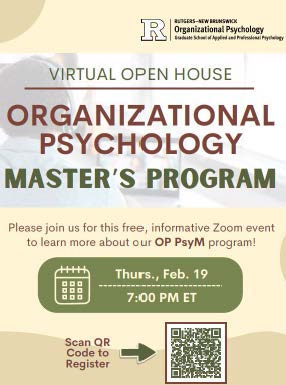
VIRTUAL OPEN HOUSE - Mon, Oct 27th 7:00 pm ET
 The Consortium for Research on Emotional Intelligence in Organizations is headquartered within the Organizational Psychology Program at Rutgers University and provides students with the unique opportunity to conduct research and collaborate with and learn from leading experts in the field of emotional intelligence. The Organizational Psychology program is currently accepting applications for our Master's (PsyM) program for matriculation in Fall 2026. Click here or scan the QR code below to register for our virtual open house to learn more.
NEW Research Fellowship
think2perform Research Institute’s Research Fellowship program invites proposals from doctoral candidates, post-docs and junior faculty pursuing self-defined research focused on moral intelligence, purpose, and/or emotional intelligence. Click here for more information.
Listen to Consortium member Chuck Wolfe interview some of the thought leaders in emotional intelligence.
Harvard Alumni Panel - Why is interest in Emotional Intelligence Soaring?
Consortium member Chuck Wolfe hosts a panel of world class leaders in the field of emotional intelligence (EI) to talk about why interest in EI is soaring. Panel members include EI Consortium members Dr. Richard Boyatzis, Dr. Cary Cherniss and Dr. Helen Riess. Click here to view the panel discussion.
Interview with Dr. Cary Cherniss and Dr. Cornelia Roche
Host, Chuck Wolfe interviews Drs. Cary Cherniss and Cornelia Roche about their new book Leading with Feeling: Nine Strategies of Emotionally Intelligent Leadership. The authors share powerful stories of cases involving outstanding leaders using strategies that can be learned that demonstrate effective use of emotional intelligence. Click here to see the interview.
Interview with Dr. Rick Aberman
See Chuck Wolfe interview Consortium member and sports psychologist Dr. Rick Aberman on peak performance and dealing with the pandemic. The interview is filled with insights, humorous anecdotes, and strategies for achieving peak performance in athletics and in life. Click here to see the interview.
Interview with Dr. David Caruso
Chuck Wolfe interviews Consortium member David Caruso talking about their work together, the ability model of emotional intelligence, and insights into how to use emotional intelligence to address staying emotionally and mentally healthy during times of crisis and uncertainty. Click here to listen to the interview.
Interview with Dr. Richard Boyazis
How can you help someone to change? Richard Boyatzis is an expert in multiple areas including emotional intelligence. Richard and his coauthors, Melvin Smith, and Ellen Van Oosten, have discovered that helping people connect to their positive vision of themselves or an inspiring dream or goal they've long held is key to creating changes that last. In their book Helping People Change the authors share real stories and research that shows choosing a compassionate over a compliance coaching approach is a far more engaging and successful way to Helping People Change. Click here to listen to the interview.
Interview with Dr. Marc Brackett
Marc Brackett, Director of the Yale Center for Emotional Intelligence, has written a wonderful book about feelings. I worked with Marc when he was first crafting his world class social and emotional learning program, RULER. Our interview highlights how Marc has achieved his own and his Uncle's vision for encouraging each of us to understand and manage our feelings. My conversation with Marc is inspiring, humorous, and engaging at times. Click here to listen to the interview.
Interview with Dr. Helen Riess
Helen Riess is a world class expert on empathy. She is an associate clinical professor of psychiatry at Harvard Medical School and director of the Empathy and Relational Science Program at Mass General Hospital. Helen discusses her new book and shares insights, learnings and techniques such as the powerful seven-step process for understanding and increasing empathy. She relates information and cases whereby she uses empathy to make a meaningful difference in areas such as parenting and leading. Click here to listen to the interview.
Interview with Dr. Maurice Elias
The show is about the Joys and Oys of Parenting, a book written by a respected colleague, Dr. Maurice Elias, an expert in parenting and emotional and social intelligence. Dr. Elias wrote a book tying Judaism and emotional intelligence together to help parents with the challenging, compelling task of raising emotionally healthy children. And while there are fascinating links to Judaism the book is really for everybody. Click here to listen to the interview.
Interview with Geetu Bharwaney
Challenges abound and life is stressful for many. So how do we cope? Chuck Wolfe interviews Geetu Bharwaney about her book, Emotional Resilience. Geetu offers research, insights, and most importantly practical tips for helping people bounce back from adversity. Click here to listen to the interview.
Interview with Dr. Daniel Goleman
Listen to an interview by with Dr. Goleman on his new book Focus: The Hidden Driver of Excellence. In the book Dan helps readers to understand the importance and power of the ability to focus one's attention, will power, and cognitive control in creating life success. Click here to listen to the interview.
Interview with Dr. John Mayer
How Personal Intelligence Shapes Our Lives: A Conversation with John D. Mayer. From picking a life partner, to choosing a career, Jack explains how personal intelligence has a major impact on our ability to make successful decisions. Click here to listen to the interview.
Interview with Dr. Cary Cherniss
Click HERE to listen to an interview with Dr. Cary Cherniss co-chair of the EI Consortium. Dr. Cherniss discusses the issue of emotional intelligence and workplace burnout.
Interview with Dr. Marc Brackett
Click HERE to listen to an interview with Dr. Marc Brackett, the newly appointed leader of the Center of Emotional Intelligence which will begin operation at Yale University in April, 2013. In this interview Dr. Brackett shares his vision for the new center.
